
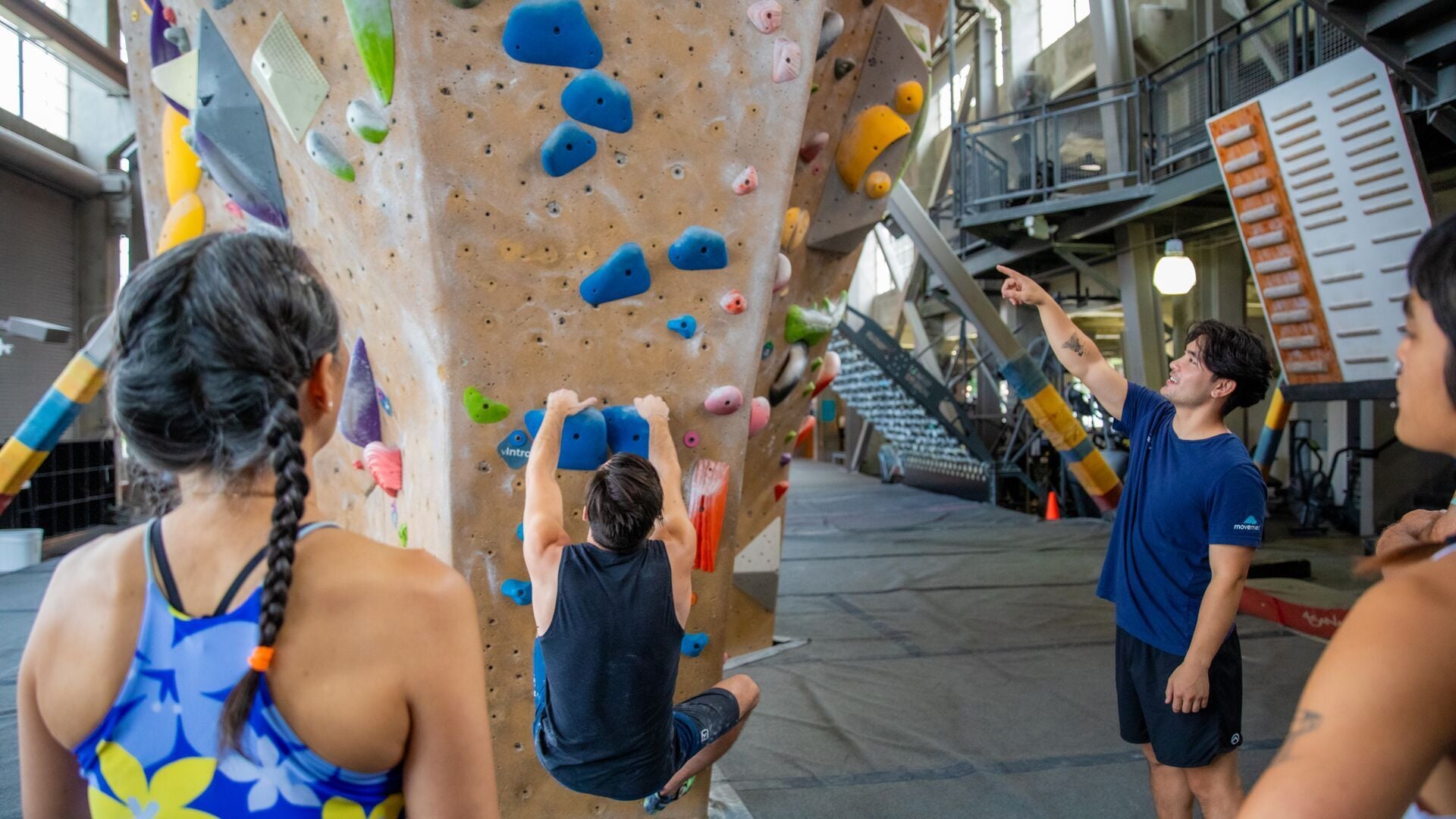

One of the first things you learn when bouldering is that eventually—you fall. And that’s not a bad thing. Whether you’re stepping onto the wall for the first time or projecting something at your limit, coming off the wall is part of trying hard moves, learning new skills, and growing as a climber.
That’s why learning how to fall matters. While no fall is completely risk-free, practicing good falling technique can help you move more confidently, feel more prepared when things don’t go to plan, and build habits that support a long and sustainable climbing journey. Like climbing itself, falling is a skill, and one worth practicing.
The Basics of a Good Bouldering Fall
When it comes to bouldering fall technique, the goal isn’t to stop your momentum—it’s to absorb and dissipate the energy of the fall through your body and the padding below.
While we don’t always know exactly when we’ll fall, here are a few habits that can help you feel more prepared when you do come off the wall.
When you land:
- Keep your knees and arms relaxed and slightly bent so they’re ready to absorb impact. Staying too rigid can increase force throughout the body.
- Aim to land with your feet relatively flat on the pads rather than only on your toes or heels.
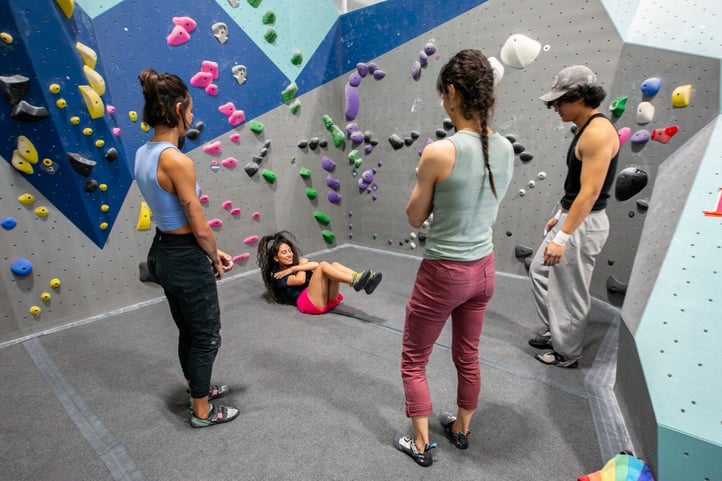
- Don’t try to stick the landing. Once your feet touch down, allow yourself to continue moving by collapsing and rolling through the pads.
- Keep your arms in and tuck your chin slightly—avoid reaching backward or trying to catch yourself with your hands.
PRO TIP: One of the most common mistakes climbers make is trying to stay upright after impact. Instead, think about landing and rolling as one smooth motion.
Different wall angles can also change how you fall. On slab or vertical terrain, a small push away from the wall may help create space. On steeper terrain, focus on bringing your feet underneath you if possible and avoid reaching out with your hands.
Understanding Fall Zones
Good falling starts before you fall. Every boulder problem has a fall zone: the space where a climber could reasonably land. Fall zones are often bigger than people expect.
Before pulling onto the wall:
- Check that the landing area is clear
- Keep bags, water bottles, and personal items off the pads
- Avoid standing underneath active climbers
- Stay aware around corners, caves, roofs, and other blind spots
If you feel unsure on a move or think you may fall, that is also a good time to take a quick moment to spot your landing and check that the area below you is clear.
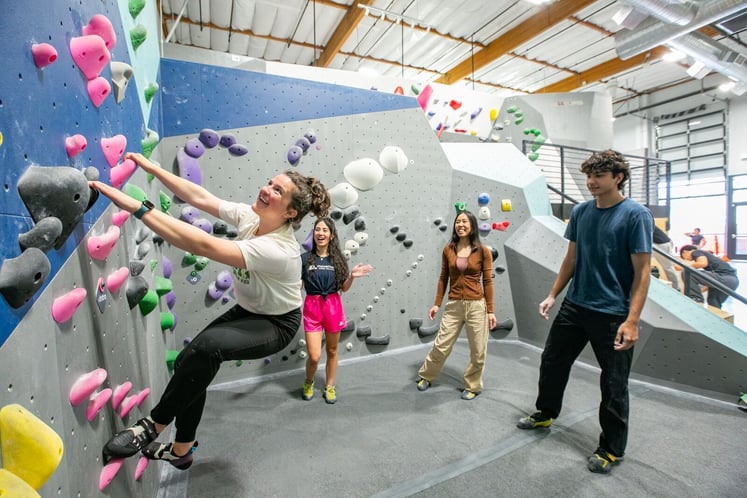
Falling is part of climbing—but it doesn’t have to be your only way down. When it makes sense, downclimbing can help reduce repeated impact and support more sustainable climbing over time, especially during long sessions.
Look for:
- Designated downclimb holds
- The easiest way down the route you just climbed
- Nearby easier terrain to descend
Before committing a challenging move, it can also help to identify a potential way back down or bail out. Being prepared to fall mentally and physically often translates into more composed and fluid movement.
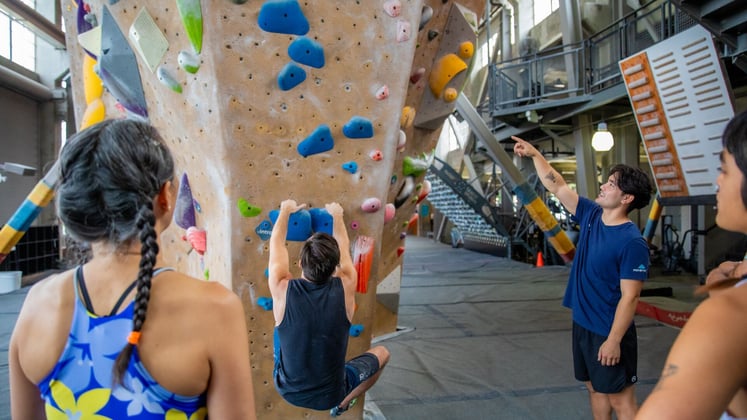
Like any climbing movement, falling takes practice. Spending time building good falling habits and downclimbing intentionally can help build that confidence over time. The more comfortable you become coming off the wall, the more freedom you’ll find moving up it.
Interested in learning first-hand from our instructors? Check out our Intro to Bouldering class and First Visit Guide to help you build a solid foundation from day one!